Skip to content

Whether you’re buying a new home, selling your current one, or simply ensuring your family’s safety, a professional electrical inspection is one of the smartest investments you can make. Electrical issues are the third leading cause of home fires in the United States, and many of these tragedies could be prevented with regular inspections.
At Waldrop Plumbing Air Electric, our licensed electricians have been performing comprehensive electrical inspections throughout Greenville, Spartanburg, Anderson, Duncan, and Greer for over 50 years. We’ve seen firsthand how early detection of electrical hazards protects families and property. Here’s everything you need to know about what happens during a home electrical inspection, what it costs, and why it matters.
What Is a Home Electrical Inspection?
A home electrical inspection is a thorough evaluation of your property’s electrical system, from the service entrance where power comes into your home, through the electrical panel and circuits, to every outlet, switch, and fixture. The goal is to identify safety hazards, code violations, and components that may fail or cause problems.
Inspections are typically needed:
- When buying or selling a home
- After major electrical work or renovations
- In homes over 40 years old as a proactive safety measure
- When adding major appliances or electric vehicle chargers
- If you notice flickering lights, frequent breaker trips, or burning smells
- Before purchasing homeowners insurance (some insurers require inspections for older homes)
What Does an Electrical Inspector Check?
A comprehensive electrical inspection covers every aspect of your home’s electrical system. Here’s what our Waldrop electricians examine during a typical inspection:
Service Entrance and Meter
We start where power enters your home. This includes the overhead service drop or underground service lateral, the meter base, and the main disconnect. We check for proper grounding, secure connections, and adequate capacity for your home’s electrical load.
In South Carolina, humidity and weather can corrode connections over time. We look for rust, corrosion, damaged insulation on service wires, and improper clearances from trees or structures.
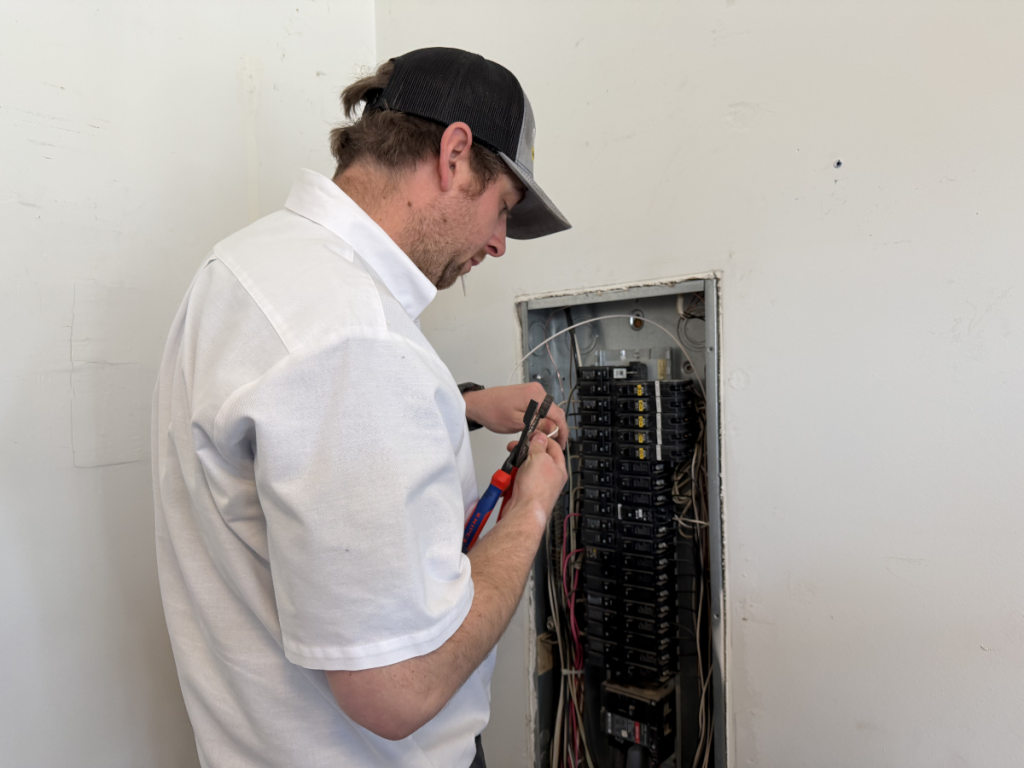
Main Electrical Panel
The electrical panel (or breaker box) is the heart of your home’s electrical system. During inspection, we evaluate:
- Panel capacity and whether it meets current household demands
- Proper circuit breaker sizing for each circuit
- Signs of overheating (discoloration, melting, burning odors)
- Double-tapped breakers (two wires on one breaker, usually a code violation)
- Proper labeling of all circuits
- Presence of obsolete or dangerous equipment like Federal Pacific or Zinsco panels
One common issue we find in older Upstate SC homes is undersized 100-amp panels serving homes that now have central air conditioning, electric water heaters, and multiple high-power devices. Upgrading to 200-amp service prevents overloads and improves safety.
Wiring Throughout the Home
We inspect accessible wiring in attics, basements, crawl spaces, and throughout living areas. Key concerns include:
- Knob-and-tube wiring or aluminum wiring (common in older homes, both present fire risks)
- Proper wire sizing for the circuits they serve
- Secure wire connections and junction boxes
- Damaged insulation or exposed wires
- Extension cords used as permanent wiring (a common but dangerous practice)
- Proper grounding and bonding throughout the system
During a recent inspection in Spartanburg, we discovered aluminum wiring with improper connections causing overheating in the walls. The homeowner had no idea, but the fire risk was significant. We recommended immediate remediation.
Outlets, Switches, and Fixtures
We test and inspect:
- GFCI outlets in bathrooms, kitchens, garages, and outdoor areas
- AFCI protection in bedrooms and living areas (required by modern codes)
- Proper outlet grounding using specialized testers
- Loose outlets or switches (fire hazards)
- Overloaded circuits or too many devices on one circuit
- Improper spacing of outlets (modern code requires outlets every 12 feet)
GFCI (Ground Fault Circuit Interrupter) outlets are especially critical in South Carolina’s humid climate. They prevent electrocution in wet areas and should be tested monthly.
Grounding and Bonding
Proper grounding protects you from electrical shock and ensures breakers trip correctly during faults. We verify the grounding electrode system (ground rods or connection to water pipes) and bonding of metal components like gas pipes, water pipes, and HVAC equipment.
Many older homes in Greenville and Anderson lack proper grounding altogether. This is a serious safety issue that should be corrected.
HVAC and Major Appliances
We inspect the electrical connections for your air conditioning system, furnace, water heater, and other major appliances. In South Carolina’s climate, AC systems work hard, and improper electrical connections can lead to efficiency loss, shortened equipment life, or fire hazards.
How Long Does an Electrical Inspection Take?
A thorough home electrical inspection typically takes 2-4 hours, depending on your home’s size, age, and complexity. A 1,500 square-foot home with a standard electrical system might take 2 hours, while a 3,500 square-foot home with multiple subpanels, outbuildings, or older wiring could take 4-5 hours.
Our Waldrop electricians never rush inspections. We take the time needed to identify every issue, explain what we find, and answer your questions. Your safety is our priority.
What Happens After the Inspection?
After completing the inspection, your Waldrop electrician will provide a detailed report of findings. We categorize issues by priority:
Immediate safety hazards: Issues that pose imminent risk of fire or shock, such as exposed wires, overheating panels, or major grounding defects. These should be repaired immediately.
Code violations: Systems that don’t meet current electrical codes. While they may have been legal when installed, updating them improves safety.
Recommended improvements: Upgrades that enhance safety, convenience, or efficiency, such as adding AFCI protection or increasing panel capacity.
Maintenance items: Minor issues like loose outlets or missing cover plates.
We’ll walk you through each finding, explain why it matters, and provide transparent pricing for any recommended repairs. You’re never pressured to do work you don’t need, but we’ll be clear about what should be prioritized for safety.
Common Issues Found During Inspections
Based on our 50+ years of experience in Upstate South Carolina, these are the most common problems we encounter:
- Undersized electrical panels (100-amp service in homes that need 200-amp)
- Missing or non-functional GFCI outlets in wet areas
- Ungrounded outlets (common in pre-1970s homes)
- Aluminum wiring with improper connections
- Double-tapped breakers or overfilled panels
- DIY electrical work that doesn’t meet code
- Outdated or damaged wiring in attics exposed to summer heat
- Overloaded circuits from modern device demands on old wiring
A Greer homeowner recently hired us after purchasing a 1960s ranch-style home. The inspection revealed knob-and-tube wiring still active in several rooms, ungrounded outlets throughout, and a severely undersized panel. We provided a comprehensive upgrade plan that prioritized the most dangerous issues first, then phased in improvements over time to fit their budget.
The Waldrop Difference: Experience You Can Trust
With over 50+ years serving Upstate South Carolina, Waldrop Plumbing Air Electric has built a reputation for honesty, expertise, and exceptional service. Our licensed electricians don’t just check boxes they educate you about your home’s electrical system and empower you to make informed decisions.
When you call Waldrop at (864) 536-0887, you’re getting:
- Background-checked, experienced electricians
- Upfront, transparent pricing
- Comprehensive written inspection reports
- Same-day or next-day appointments in most cases
- A+ BBB rating and thousands of five-star reviews
- Ongoing support for Club Wally members
Frequently Asked Questions
Is an electrical inspection required when buying a home?
In South Carolina, electrical inspections aren’t legally required for most home sales, but they’re highly recommended. Many mortgage lenders and insurance companies require inspections for older homes. Even if not required, an inspection protects you from inheriting expensive and dangerous electrical problems.
How often should I have my home’s electrical system inspected?
The National Fire Protection Association recommends electrical inspections every 3-5 years for most homes. However, homes over 40 years old, homes with aluminum wiring, or homes where you’ve noticed electrical issues should be inspected more frequently. Club Wally members receive regular system checks as part of their annual service.
Can an electrical inspection prevent homeowners insurance issues?
Yes. Many insurance companies in South Carolina refuse coverage or charge much higher premiums for homes with knob-and-tube wiring, Federal Pacific panels, or other known hazards. Proactive inspections and repairs can qualify you for better insurance rates and ensure you’re not denied coverage when you need it most.
Don’t wait for an electrical emergency to discover problems with your home’s electrical system. Whether you’re buying, selling, or simply being proactive about safety, a professional electrical inspection from Waldrop provides peace of mind. Call (864) 536-0887 or visit www.callwaldrop.com today to schedule your comprehensive electrical inspection. Serving Greenville, Spartanburg, Anderson, Duncan, Greer, and all of Upstate SC.