Proudly serving Upstate South Carolina and surrounding areas






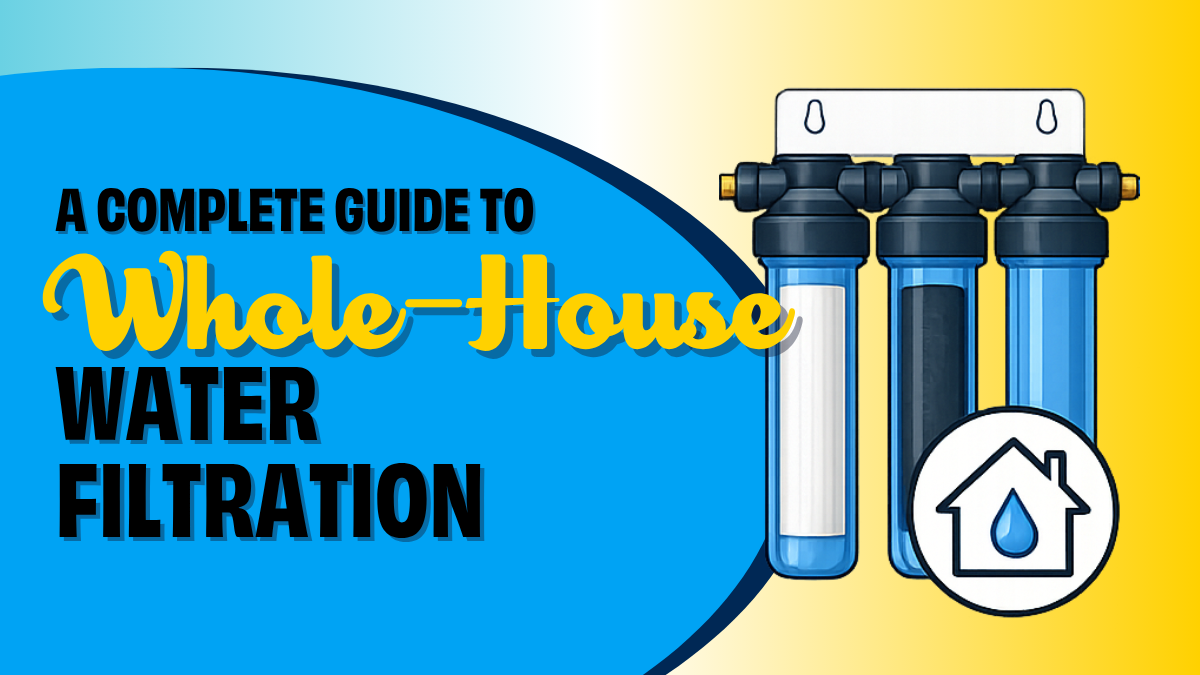
A Complete Guide to Whole-House Water Filtration
Serving Upstate South Carolina with trusted home comfort solutions since 1970.

4.8 Google Rating


If you’ve ever filled a glass of water and noticed a weird taste, a faint smell, or a cloudy appearance, you’re not imagining things. Water quality varies significantly across Upstate South Carolina, and what’s technically “safe” to drink isn’t always what you’d call great.
I’m Jamie with Waldrop Plumbing Air Electric, and our clean water team installs water filtration systems across Greenville, Spartanburg, and the surrounding counties. Let me break down what whole-house water filtration actually does, what it costs, and whether it makes sense for your home.
What Is Whole-House Water Filtration?
A whole-house water filtration system (also called a point-of-entry system) filters all the water entering your home, not just the kitchen faucet. Every shower, every toilet, every washing machine, every faucet gets filtered water.
This is different from an under-sink filter or a fridge filter, which only treats water at one point. With a whole-house system, you get clean water everywhere.
Why does that matter? Because you don’t just drink water. You bathe in it, cook with it, wash clothes in it, and breathe the steam when you take a hot shower. If your water has chlorine, sediment, or other contaminants, a single-faucet filter only solves part of the problem.
Water Quality in Upstate South Carolina
Let me be specific about what we’re dealing with locally, because water quality isn’t one-size-fits-all:
Municipal Water (Greenville Water, Spartanburg Water, ReWa, etc.)
Upstate SC actually has some of the best municipal water in the Southeast, Greenville Water sources from the pristine North Saluda and Table Rock reservoirs. But “good” at the source doesn’t mean perfect at your faucet:
- Chlorine/chloramine is added for disinfection. It keeps the water safe in the pipes but creates taste and odor issues, and can dry out skin and hair.
- Disinfection byproducts (DBPs) form when chlorine reacts with organic matter. Trihalomethanes (THMs) and haloacetic acids (HAAs) are regulated but present in all chlorinated water.
- Old pipes in your home (or in the municipal system) can add trace metals, including lead from pre-1986 solder joints.
- Sediment from aging water mains — particularly after water main breaks or hydrant flushing.
Well Water (Rural Greenville, Spartanburg, Laurens, Anderson Counties)
If you’re on well water, you’re your own water utility and well water across the Upstate commonly has:
- Hard water (high calcium and magnesium) — stains fixtures, scales water heaters, makes soap less effective
- Iron and manganese — orange/brown staining on fixtures, metallic taste
- Sediment — particularly common in red clay areas
- Sulfur — that rotten egg smell
- Bacteria — E. coli and coliform from surface water infiltration
- Tannins — yellow/brown water from decomposing organic material
- Low pH (acidic water) — corrodes copper pipes and can leach metals
Jacob on our plumbing team tests well water before recommending any filtration system. The treatment depends entirely on what’s in your specific water. There’s no one-size-fits-all solution for well water.

Types of Whole-House Water Filtration Systems
1. Sediment Filters
What they remove: Dirt, sand, rust, silt, and particulate matter
Best for: Municipal water with sediment issues, or as a pre-filter for well water systems
Maintenance: Replace filter cartridge every 3-6 months ($10-$30 per cartridge)
This is the most basic level of filtration and is often the first stage in a multi-stage system. If you notice particles or cloudiness in your water, a sediment filter is the starting point.
2. Carbon Filtration Systems
What they remove: Chlorine, chloramine, VOCs, pesticides, herbicides, taste, and odor
Best for: Municipal water — eliminates the chemical taste and disinfection byproducts
Maintenance: Replace carbon media every 6-12 months or per manufacturer schedule
Carbon filtration is the most popular whole-house option for homeowners on municipal water. It makes a dramatic difference in taste and smell. The water coming out of every faucet tastes like it came from a bottle.
3. Water Softeners
What they remove: Calcium and magnesium (hardness minerals)
Best for: Hard water areas — prevents scale buildup in pipes, water heaters, and appliances
Maintenance: Add salt every 1-2 months ($5-$10/bag), resin replacement every 10-15 years
Water softeners use ion exchange — hardness minerals are swapped for sodium ions. If you have hard water (and many rural Upstate SC homes do), a softener protects your plumbing, extends the life of your water heater, and makes soap and shampoo work dramatically better.
A note on well water: Caleb on our team always tests hardness before recommending a softener. Some well water in Anderson and Laurens counties runs 15-25 grains per gallon, extremely hard. That level of hardness will destroy a tankless water heater in a few years without softening.
4. Iron and Manganese Filters
What they remove: Dissolved iron, manganese, and hydrogen sulfide (rotten egg smell)
Best for: Well water with staining or odor issues
Maintenance: Annual media replacement or backwash system (varies by type)
If your toilets have orange stains, your laundry has a dingy look, or your water smells like eggs, you probably need iron/manganese treatment. These systems oxidize the dissolved metals so they can be filtered out.
5. UV Disinfection
What it removes: Bacteria, viruses, and parasites (E. coli, coliform, Giardia, Cryptosporidium)
Best for: Well water that tests positive for bacteria, or as a safety backstop for any well system
Maintenance: Replace UV lamp annually ($50-$100)
UV disinfection is a chemical-free way to make well water microbiologically safe. It’s typically the last stage in a multi-stage system. The water needs to be clear (pre-filtered) for UV to work effectively.
6. Reverse Osmosis (Whole-House)
What it removes: Virtually everything — dissolved solids, heavy metals, fluoride, nitrates, arsenic, pharmaceuticals
Best for: Severely contaminated water or homeowners who want the highest level of purification
Maintenance: Membrane replacement every 2-3 years ($200-$500), pre-filters every 6-12 months
Whole-house RO is the nuclear option. It produces extremely pure water, but at a cost — both financial and practical. RO wastes 2-4 gallons of water for every gallon it produces, and it strips beneficial minerals along with contaminants. For most Upstate SC homes, a carbon system or a targeted multi-stage system is more practical (and more affordable). Point-of-use RO under the kitchen sink makes more sense than whole-house RO for most families.
How Much Does Whole-House Water Filtration Cost?
Here’s what to expect in Upstate SC in 2026:
- Installation of Whole House Filter – $1,000-$10,000
- Installation of Sediment Filter – $150-$500
What affects the price:
- Water quality (worse water = more stages of treatment)
- Home size and flow rate requirements
- Plumbing modifications needed
- System brand and quality
- Whether bypass plumbing is installed (recommended for maintenance)
How to Choose the Right System
Step 1: Get Your Water Tested
This is non-negotiable. You need to know what’s in your water before you can choose the right filter. A basic test covers:
- pH
- Hardness
- Iron and manganese
- TDS (total dissolved solids)
- Bacteria (for well water)
- Chlorine/chloramine (for municipal water)
Our team can test your water during a home visit, or you can send a sample to a certified lab.
Step 2: Match the System to the Problem
| Your Problem | System Needed |
| Bad taste/chlorine smell (city water) | Carbon filtration |
| Hard water/scale buildup | Water softener |
| Sediment/particles | Sediment filter |
| Iron stains/rotten egg smell | Iron/manganese filter |
| Bacteria in well water | UV disinfection |
| Multiple issues (well water) | Multi-stage system |
Step 3: Size It for Your Home
A system that’s too small will reduce water pressure and wear out faster. Key factors:
- Flow rate: How many gallons per minute your home uses at peak demand (typically 7-12 GPM for a 2-4 bathroom home)
- Pipe size: Your main water line size (¾” or 1″ in most homes)
- Household size: More people = more water = larger capacity needed
Step 4: Consider Maintenance Requirements
Every system requires some maintenance. Be honest with yourself about what you’ll actually do:
- Will you remember to replace filter cartridges every 6 months?
- Will you add salt to a softener monthly?
- Do you want a system that backwashes automatically?
Blake on our team always walks customers through maintenance requirements before installation. The best system in the world doesn’t work if the filters never get changed.
Common Water Filtration Myths
“City water is perfectly safe, so I don’t need a filter.”
Safe and great aren’t the same thing. Municipal water meets EPA minimums, but those minimums allow certain levels of chlorine, disinfection byproducts, and other compounds you’d rather not drink.
“Bottled water is better than filtered water.”
Most bottled water IS filtered tap water. You’re paying $1-$3 per gallon for something your home filtration system can produce for pennies. Plus, the plastic waste adds up.
“A whole-house filter will make my water pressure drop.”
A properly sized system has minimal impact on pressure — less than 5 PSI typically. An undersized system or a clogged filter will cause pressure drops, which is why proper sizing and regular maintenance matter.
“Water softeners make water taste salty.”
Softeners add a tiny amount of sodium — about 12.5 mg per 8 oz glass for moderately hard water. That’s less sodium than a slice of bread. Most people can’t taste it at all.
“I just need the cheapest option.”
You get what you pay for. A $200 big-box store filtration system with a cheap carbon cartridge might work for 6 months, then it becomes a flow restriction that does nothing. Invest in a quality system with certifiable performance.
FAQ
Is whole-house water filtration worth the cost?
For most Upstate SC homes, yes. The benefits extend beyond drinking water — you’re protecting your plumbing, water heater, and appliances from sediment and scale, improving skin and hair health by removing chlorine, and eliminating taste/odor issues from every tap.
Can I install a whole-house water filter myself?
Basic sediment filters, possibly. Multi-stage systems with bypass valves, drain connections, and electrical components (UV) should be professionally installed. Improper installation can cause leaks, pressure problems, and contamination of the treated water.
Do I need a water softener if I’m on city water?
Upstate SC municipal water is generally soft to moderately hard. Most city water customers don’t need a softener, but a carbon filter for chlorine removal is a great upgrade. Well water customers in the area often do need softening.
Does whole-house water filtration remove fluoride?
Standard carbon filters do NOT remove fluoride. If fluoride removal is your goal, you need a reverse osmosis system (whole-house or point-of-use) or an activated alumina filter. Most municipal water in Upstate SC contains fluoride at the EPA-recommended level.
What’s the difference between a water filter and a water softener?
Filters remove contaminants (sediment, chlorine, chemicals, bacteria). Softeners remove hardness minerals (calcium and magnesium). They solve different problems and are often used together. If you have hard water AND chlorine taste, you likely need both.
──────────────────────────────────────────────────
Want to find out what’s in your water? Call Waldrop at (864) 536-0887 for a water quality assessment. We’ll test your water, explain what we find, and recommend the right filtration solution for your specific situation — whether that’s a simple carbon filter or a multi-stage well water system.
Club Wally members can add water filtration maintenance to their service plan, so filter changes happen on schedule without you having to remember.
Waldrop Plumbing Air Electric — clean water, comfortable homes since 1970.


Complete Home Comfort Awaits
From plumbing and electrical to heating, cooling, and indoor air quality, Waldrop is here to keep your whole home running comfortably. Schedule your service today and experience trusted care from the team Upstate homeowners have counted on for generations.