Skip to content

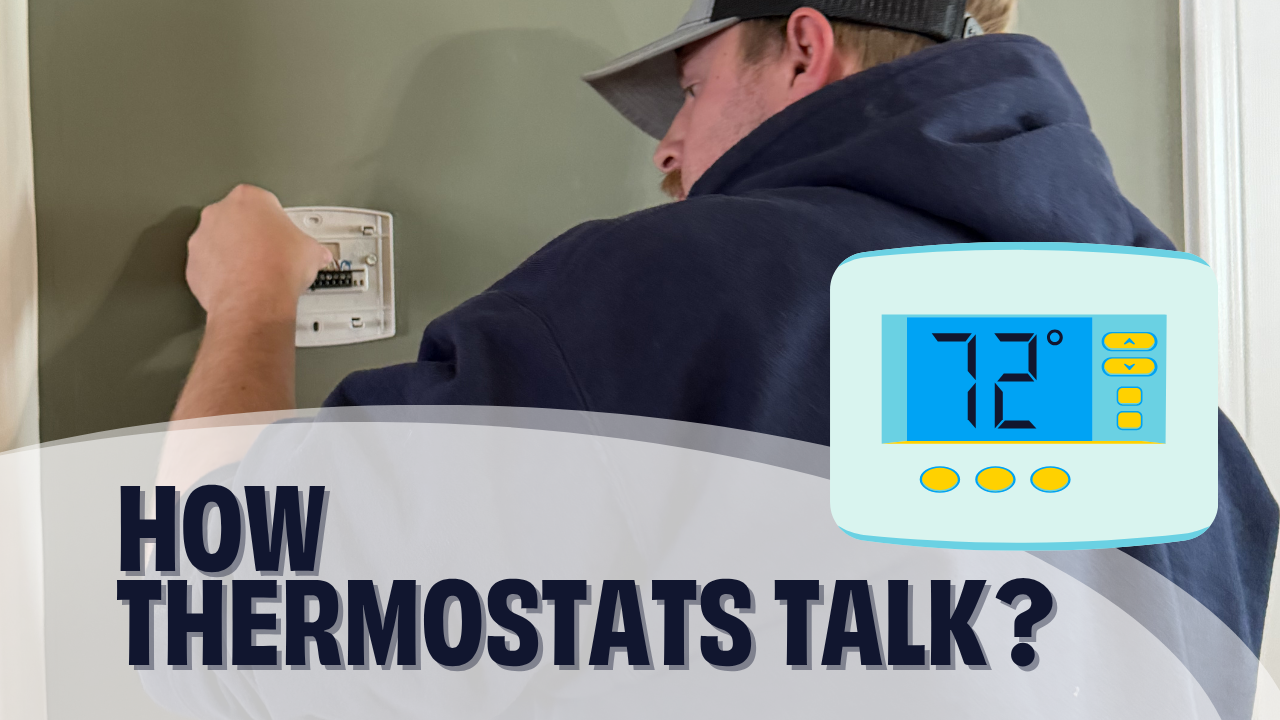
When most folks think about their HVAC system, they picture the big outdoor unit humming away in the yard or the furnace tucked away in a closet. But did you know that one of the most important parts of your entire comfort system is sitting right on your wall?
That’s right—the thermostat may be small, but it’s the command center for your heating and cooling system.
Our NATE-certified HVAC technician, Graham, recently explained how thermostats communicate with HVAC systems, and today we’re breaking it down in plain English.
Your Thermostat Is Like a Telephone Operator
According to Graham, most thermostats communicate with your HVAC system through low-voltage wiring—typically around 24 volts.
Back when Graham was in HVAC school, one of his instructors used a simple analogy that stuck with him: think of the thermostat like a telephone operator.
When you adjust the temperature on your thermostat, you’re essentially placing a call.
If your home feels too warm and you set the thermostat lower, the thermostat sends a signal to your HVAC system saying, “Hey, we need some cooling over here!”
If your home is too cold and you turn the temperature up, it sends a different signal requesting heat.
The thermostat doesn’t actually create heating or cooling itself. Instead, it tells the right parts of your HVAC system when to turn on and what job needs to be done.
How the Communication Works
Most residential HVAC systems use low-voltage control wiring to connect the thermostat to the equipment.
When the thermostat detects that your home’s temperature doesn’t match the setting you’ve chosen, it sends a signal through those wires to:
- Start the air conditioner
- Turn on the furnace
- Activate the heat pump
- Run the indoor blower fan
Think of it as the thermostat being the boss and the HVAC equipment being the crew. The thermostat gives the orders, and the equipment gets to work.
Why a Working Thermostat Matters
Because the thermostat controls the entire system, even a small problem can create big comfort issues.
A faulty thermostat may cause:
- Uneven temperatures throughout the home
- Heating or cooling that won’t turn on
- A system that runs constantly
- Higher energy bills
- Poor indoor comfort
Sometimes homeowners assume they have a major HVAC problem when the issue is actually the thermostat or the communication between the thermostat and the system.
Smart Thermostats Make Things Even Easier
Today’s smart thermostats take communication to the next level.
- Learn your schedule
- Adjust temperatures automatically
- Connect to your smartphone
- Help improve energy efficiency
- Provide system alerts and reminders
While the technology has evolved, the basic concept remains the same: the thermostat is still sending instructions that help your HVAC system keep your home comfortable.
The Bottom Line
Your thermostat may be one of the smallest components in your home comfort system, but it plays one of the biggest roles.
Every time you adjust the temperature, that thermostat communicates with your HVAC equipment using low-voltage signals, telling it exactly what it needs to do to keep your family comfortable.
So the next time you walk past that little box on the wall, remember: it’s not just displaying the temperature—it’s controlling your entire HVAC system.
Want More HVAC Tips and Behind-the-Scenes Content?
If you enjoyed learning how your thermostat communicates with your HVAC system, be sure to check out our YouTube channel for more homeowner tips, maintenance advice, troubleshooting insights, and behind-the-scenes looks at what our technicians do every day.
Our team regularly shares educational videos designed to help homeowners better understand their HVAC, plumbing, and electrical systems without all the confusing jargon.
🎥 Don’t forget to like, subscribe, and turn on notifications so you never miss a new video from the Waldrop team. Whether you’re looking to improve your home’s comfort or simply learn how your systems work, we’ve got plenty of helpful content coming your way!