Proudly serving Upstate South Carolina and surrounding areas






What Temperature Should Your Water Heater Be Set To?
Serving Upstate South Carolina with trusted home comfort solutions since 1970.

4.8 Google Rating

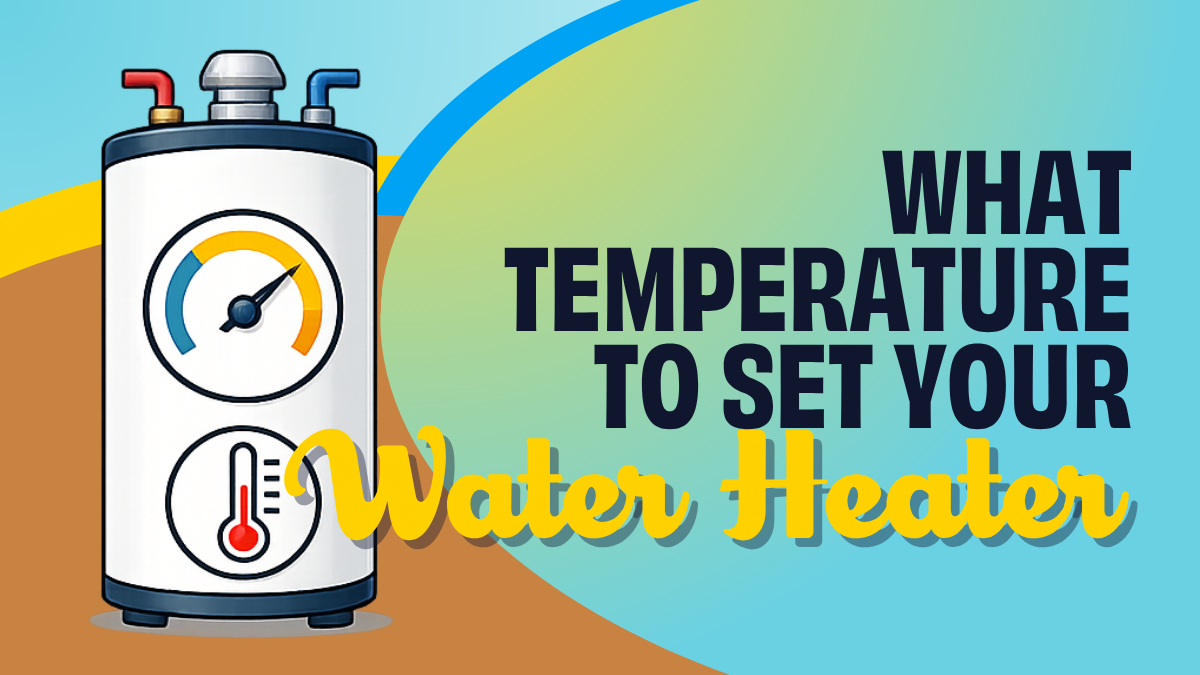
It’s one of those things you probably never think about, until someone in the house gets scalded, your energy bill spikes, or your hot water runs out faster than it should. The temperature setting on your water heater matters more than most people realize.
I’m Jamie with Waldrop Plumbing Air Electric, and our plumbers deal with water heater issues across Upstate South Carolina every day. Let me give you the quick answer and then explain why it matters.
The Department of Energy recommends 120°F (49°C) as the ideal water heater temperature for most households. This gives you:
- Hot enough water for comfortable showers and effective cleaning
- Low enough to prevent scalding (especially important with kids and elderly family members)
- Reduced energy costs compared to higher settings
- Minimized mineral buildup and corrosion in your tank
That said, 120°F isn’t the right answer for every home. Let me explain when you might need to go higher or could actually go lower.
Why 120°F Is the Sweet Spot
Scald Prevention
Water at 140°F can cause a third-degree burn in 5 seconds. At 120°F, it takes about 5 minutes of sustained contact. If you have young children, elderly family members, or anyone with reduced sensation (neuropathy, for example), 120°F is the safe choice.
Our tech Gage has responded to calls where homeowners had their water heater cranked to 150°F+ and didn’t even realize it. Most manufacturers ship units set between 130-140°F. That’s hotter than most people need or expect.
Energy Savings
Every 10°F reduction in water heater temperature saves 3-5% on your water heating bill. For the average Upstate SC household, dropping from 140°F to 120°F saves roughly $40-$60 per year.
That might not sound life-changing, but over the 10-12 year life of a water heater, that’s $400-$720 — basically the cost of a new mid-range tank unit.
Higher temperatures accelerate mineral deposit formation inside your tank and on heating elements. This is particularly relevant in parts of Upstate SC with harder water — rural areas of Spartanburg, Laurens, and Anderson counties especially. Lower temperatures mean slower buildup and a longer-lasting water heater.
When You Should Set It Higher (130-140°F)
There are legitimate reasons to keep your water heater above 120°F:
You Have a Dishwasher Without a Booster Heater
Most modern dishwashers have a built-in booster that heats water to the 140°F needed for sanitization. But older dishwashers (pre-2010 or so) may rely on your water heater to deliver water that hot. Check your dishwasher manual — if it doesn’t have a booster, you may need 130-140°F at the water heater.
You Have a Large Family with High Hot Water Demand
If your tank is undersized for your household, setting the temperature slightly higher (125-130°F) can stretch your hot water supply. The hotter water mixes with more cold water at faucets, effectively giving you more usable hot water per tank.
You Have a Recirculating System with Long Pipe Runs
In homes with a hot water recirculation system (or just very long pipe runs from the water heater to faucets), water loses heat as it travels. Setting the heater a bit higher compensates for this loss.

How to Check and Adjust Your Water Heater Temperature
Most gas water heaters have a dial on the gas valve near the bottom of the tank. Look for markings like “warm,” “hot,” and “very hot” or degree markers.
Steps:
- Find the temperature dial on the gas valve
- Note the current setting
- Turn the dial to your desired temperature
- Wait 2-3 hours, then test the hot water at a faucet with a thermometer
- Adjust as needed
Pro tip from our team: Those vague labels (“warm,” “hot”) aren’t standardized. “Hot” on one brand might be 120°F, on another it might be 140°F. Always verify with a thermometer.
Electric water heaters typically have one or two thermostats behind access panels on the tank. Important: turn off the circuit breaker before removing the panel.
Steps:
- Turn off the circuit breaker for the water heater
- Remove the access panel(s) — there may be insulation behind them
- Use a flathead screwdriver to adjust the thermostat dial
- If there are two panels (upper and lower), set both to the same temperature
- Replace the panels and insulation
- Turn the breaker back on
- Wait 2-3 hours and test with a thermometer
If you’re not comfortable working around electrical components, call us. It’s a quick job, and it’s not worth the risk.
Tankless units usually have a digital control panel right on the front. Just press the up/down arrows to your desired temperature. This is the easiest adjustment of all.
How to Test Your Water Temperature
Don’t trust the dial on your water heater — verify the actual output:
- Let the hot water run at the faucet nearest your water heater for 1-2 minutes
- Fill a glass or cup with the hot water
- Insert a cooking thermometer (the instant-read kind works great)
- Read the temperature — it should be within a few degrees of your setting
If it’s significantly different from what your water heater says, the thermostat may need recalibration or replacement. Chad on our team can check this during a regular service call.
Common Water Heater Temperature Problems
“My hot water is scalding!”
Your thermostat is set too high, the thermostat is malfunctioning, or (on electric heaters) one element has failed and the other is overcompensating. Test and adjust. If adjusting the dial doesn’t fix it, call a plumber, a stuck thermostat is a safety issue.
“My hot water runs out too fast.”
Could be the temperature setting (too low means less mixing with cold), a failing heating element, sediment buildup in the tank, or simply an undersized tank for your household. Our plumbers can diagnose this quickly.
“Hot water temperature fluctuates.”
This is often a failing mixing valve, a bad thermostat, or cross-connected plumbing (where hot and cold lines are linked somewhere in the system). It’s not normal and should be checked.
FAQ
What is the default water heater temperature from the factory?
Most manufacturers set water heaters between 130-140°F from the factory. This is higher than the recommended 120°F, so you should check and adjust when a new unit is installed. At Waldrop, we always set it to the homeowner’s preference during installation.
How do I know if my water heater thermostat is broken?
If the water temperature doesn’t match the thermostat setting (verified with a thermometer), if water is extremely hot despite a low setting, or if you get no hot water at all, the thermostat may be faulty. On electric heaters, a multimeter test can confirm.
──────────────────────────────────────────────────
Have questions about your water heater? Call Waldrop at (864) 536-0887. Whether it’s a simple temperature adjustment or a full water heater replacement, our plumbing team has seen it all.
Club Wally members get annual water heater inspections as part of their maintenance plan — catching small problems before they become expensive ones.
Waldrop Plumbing Air Electric — keeping Upstate SC comfortable since 1970.
Complete Home Comfort Awaits
From plumbing and electrical to heating, cooling, and indoor air quality, Waldrop is here to keep your whole home running comfortably. Schedule your service today and experience trusted care from the team Upstate homeowners have counted on for generations.