Proudly serving Upstate South Carolina and surrounding areas






Tankless Water Heaters in Greenville & Upstate SC
Serving Upstate South Carolina with trusted home comfort solutions since 1970.

4.8 Google Rating

A tankless water heater produces hot water as it is needed instead of storing it in a large tank. This design can free up space, reduce standby energy loss, and provide a steady supply of hot water when the system is properly sized for the home.
Waldrop Plumbing Air Electric provides tankless water heater installation in Greenville, SC, and throughout Upstate South Carolina and surrounding areas. Our plumbers can evaluate your current equipment, household demand, fuel source, and plumbing connections before recommending an on-demand water heater. We also provide tankless water heater repair and maintenance for existing systems.
How Does a Tankless Water Heater Work?
A traditional water heater keeps a tank of water heated throughout the day. A tankless system begins heating water when a hot water fixture is opened.
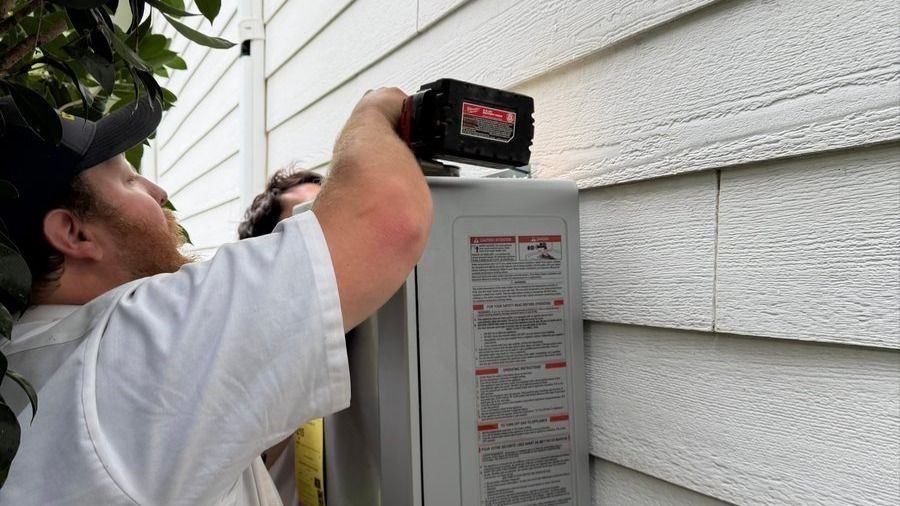
Cold water enters the unit and passes through a heat exchanger. A gas burner or electric heating element raises the water temperature before it travels to the faucet, shower, or appliance requesting hot water. The unit turns off when demand stops.
A tankless system does not provide instant hot water at every fixture. Water already sitting in the plumbing line must still travel out before heated water reaches the tap. The distance between the unit and fixture affects how long that takes.
Benefits of an On-Demand Water Heater
Tankless systems can be a good fit for homeowners who want to replace a bulky storage tank or improve how hot water is delivered.
Potential benefits include:
- Hot water produced when fixtures are in use
- Less floor space required than many tank-style units
- Reduced standby heat loss
- Longer expected service life than many conventional tanks
- Lower risk of a large tank releasing stored water
- Temperature controls that allow precise adjustments
- Gas and electric equipment options
- The ability to size equipment around household demand
The results depend on proper sizing and installation. A unit that is too small may struggle when several fixtures need hot water at the same time.
Tankless Water Heater Installation
Installing a tankless water heater requires more than removing the old tank and connecting a new unit. The plumber must confirm that the home can support the equipment and that the installation meets the manufacturer’s requirements.
A tankless installation may involve:
- Removing the existing water heater
- Selecting the correct system capacity
- Modifying water lines
- Updating gas piping
- Installing or adjusting venting
- Adding condensate drainage
- Installing shutoff and service valves
- Making electrical connections
- Mounting the new equipment
- Testing temperature and flow
Gas tankless units may require a larger gas supply line than the previous water heater. Electric models can place a significant demand on the electrical system and may require panel or wiring improvements. Waldrop can coordinate related services when needed.
Choosing the Right Tankless Water Heater
The right system is based on how much hot water your household may need at one time. The number of people in the home is only one part of the calculation.
Important sizing factors include:
- Number of bathrooms
- Number of showers that may run together
- Bathtub size
- Dishwasher and washing machine use
- Incoming water temperature
- Desired outlet temperature
- Available gas or electrical capacity
- Fixture flow rates
- Future household needs
Tankless systems are commonly rated by flow rate and temperature rise. A plumber can calculate the expected demand and recommend equipment that can support the fixtures likely to be used together.
Gas and Electric Tankless Water Heaters
Both gas and electric tankless systems produce hot water as needed, but they have different installation requirements.
Gas Tankless Water Heaters
Gas models can often support higher flow rates, making them a common choice for homes with greater hot water demand. Installation may require gas line changes, venting, combustion air, and condensate drainage.
Electric Tankless Water Heaters
Electric models do not require gas piping or combustion venting. They may require several high-amperage circuits, depending on the equipment capacity. The home’s electrical panel must be evaluated before installation.
The best option depends on available utilities, household demand, installation conditions, and operating preferences.
Tankless Water Heater Repair
Tankless equipment can develop problems with ignition, sensors, water flow, venting, scale buildup, or internal components. Some units display an error code that helps identify where the problem may be located.
Contact Waldrop for tankless water heater repair if you notice:
- No hot water
- Water that changes between hot and cold
- Reduced hot water flow
- The unit shutting down during use
- Unusual noises
- Water leaking near the equipment
- An error code on the control panel
- Delayed ignition
- Inconsistent temperatures between fixtures
- Discolored or unusual-smelling water
A repair may involve cleaning the system, replacing a failed component, correcting a venting or fuel issue, or addressing mineral buildup. The plumber will inspect the equipment before recommending a repair.
Why Tankless Water Heaters Need Maintenance
Minerals in the water can collect inside the heat exchanger as water is heated. Over time, this scale may restrict flow, reduce heat transfer, and contribute to temperature or performance problems.
Tankless maintenance may include:
- Flushing the heat exchanger
- Cleaning inlet filters
- Inspecting connections
- Checking for leaks
- Reviewing stored error codes
- Inspecting venting
- Testing combustion on applicable gas models
- Checking temperature and water flow
- Confirming that service valves operate correctly
Maintenance needs vary based on water quality, system design, household use, and manufacturer instructions. Homes with hard water may need more frequent service. A water filtration system may help address certain water quality concerns.
Tankless Water Heater Cost Factors
Tankless water heater cost depends on the equipment and the work required to install it safely. A direct replacement in a home already configured for tankless equipment may be different from converting a traditional tank system.
Factors that can affect the project cost include:
- Gas or electric equipment type
- Required flow rate
- Unit efficiency and features
- Gas line capacity
- Electrical panel capacity
- Venting requirements
- Condensate drainage
- Plumbing modifications
- Installation location
- Removal of existing equipment
- Permit or inspection requirements
- Accessibility of utility connections
Waldrop evaluates the home before providing recommendations. Qualifying customers can pre-qualify online for financing before approved work begins.
Tankless Water Heater Replacement
Repair may not be the best option when a tankless unit has extensive damage, repeated failures, or parts that are no longer readily available.
Replacement may be recommended when:
- The unit needs frequent repairs
- The heat exchanger is leaking
- Repair costs are high compared with replacement
- The equipment no longer supports household demand
- Severe scale damage has affected performance
- The current installation has ongoing venting or capacity problems
- The unit is near the end of its expected service life
A replacement appointment is also an opportunity to review whether the original system was sized correctly and whether household hot water needs have changed.
Converting From a Tank Water Heater to Tankless
Many homes can be converted from a tank-style water heater to a tankless system, but the project may require utility and plumbing changes.
Before recommending a conversion, our plumbers review:
- The existing fuel source
- Available gas pressure or electrical capacity
- The proposed mounting location
- Venting options
- Water line configuration
- Drainage for condensation
- Household hot water demand
- Access for future maintenance
Homeowners who prefer a storage tank can also explore conventional water heater services. The right choice depends on the home and how the household uses hot water.
Our Tankless Water Heater Installation Process
Our process begins with a review of your current water heater and expected hot water demand.
Evaluate the Home
We inspect the existing equipment, water lines, utility connections, venting options, and proposed installation area.
Calculate Hot Water Demand
We review how many fixtures may need hot water at the same time and determine the required flow capacity.
Explain the Options
The plumber discusses suitable gas or electric systems and identifies any plumbing, venting, gas, or electrical updates needed.
Install the New Equipment
We remove the old unit when applicable, complete the required connections, and install the tankless water heater.
Test the System
The plumber checks for leaks, tests water temperature and flow, and confirms that the unit operates properly.
Review Operation and Maintenance
We explain basic controls, service needs, and any steps the homeowner should follow after installation.
FOR ALL YOUR HOME SERVICE NEEDS
Why Choose Waldrop for Tankless Water Heater Service?
A tankless water heater must match the home’s plumbing, utility capacity, and hot water demand. Waldrop serves homeowners throughout Upstate South Carolina and surrounding areas with installation, repair, and related home service support.
Homeowners choose Waldrop because we offer:
- Complete installation evaluations: We review water demand, gas or electrical capacity, venting, drainage, and plumbing connections.
- Tankless repair and replacement: Our plumbers work on existing systems and can explain when replacement is more practical.
- 24/7 emergency scheduling: Homeowners can request service at any time for urgent leaks or loss of essential hot water service.
- Plumbing and electrical support: Waldrop can address related piping, gas line, wiring, and electrical panel needs.
- Financing options: Qualifying customers can pre-qualify online before approved work begins.
- Clear equipment recommendations: We explain sizing and installation requirements before the project moves forward.
Schedule Tankless Water Heater Installation in Greenville, SC
A properly sized tankless water heater can provide dependable hot water without storing it in a large tank. Professional installation helps make sure the equipment has the water flow, fuel supply, venting, and electrical support it needs.
Contact Waldrop Plumbing Air Electric for tankless water heater installation in Greenville, SC, and throughout Upstate South Carolina and surrounding areas. Call our team or use our online contact form to book an appointment.
club wally members offer
10% Off
Water Heater ReplacementSend Us A Message


Frequently Asked Questions
expert answers to your questions
Have a different question? Reach out to us – we’re happy to help!
recent reviews
What Homeowners Are Saying About Us

More than 8536+
5 Star ReviewsReview Highlights
Customers consistently praise the team's exceptional professionalism, expertise, and genuine customer care across HVAC, plumbing, and electrical services. Technicians are repeatedly highlighted for their knowledge, clear communication, thorough explanations of work and options, and honest recommendations—offering solutions tailored to actual needs without pushing unnecessary add-ons. The combination of prompt response times, efficient same-day service, quality workmanship, and courteous, friendly technicians creates experiences that keep customers coming back and eager to recommend the team to others.


Based on 8,536+ Reviews
Complete Home Comfort Awaits
From plumbing and electrical to heating, cooling, and indoor air quality, Waldrop is here to keep your whole home running comfortably. Schedule your service today and experience trusted care from the team Upstate homeowners have counted on for generations.